Christopher Nolan could not have received higher acclaim with Oppenheimer. With his first two Oscars for directing and producing, and his film becoming the highest-grossing biopic of all time at the time of release, it’s difficult to find another filmmaker who received as many accolades as Nolan in 2023. What’s even more difficult is to follow up on what many perceived to be his magnum opus, leaving Nolan with a huge task on his hands. But what does he do? Adapts one of the boldest and most beloved novels in fiction, Homer’s The Odyssey.
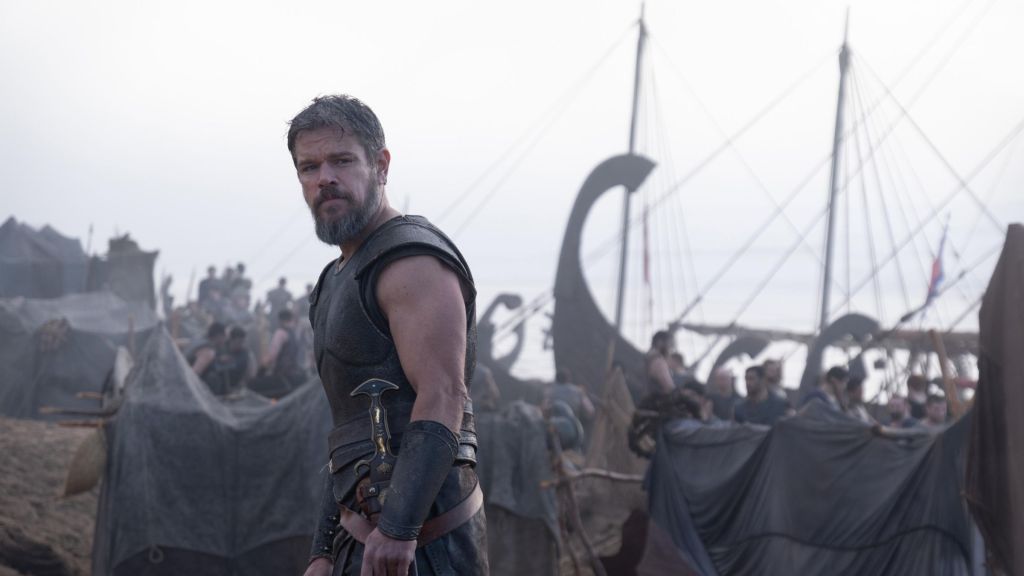
Despite the controversy you may be seeing online, Christopher Nolan’s The Odyssey follows the novel’s storyline to a T. It follows the Greek king of Ithaca, Odysseus (Matt Damon), as he tries to find his way home after conquering Troy and winning the Trojan War. While he encounters mystical beings and dangerous waters, his wife and son are dealing with their own set of issues as suitors attempt to seize power in Ithaca.
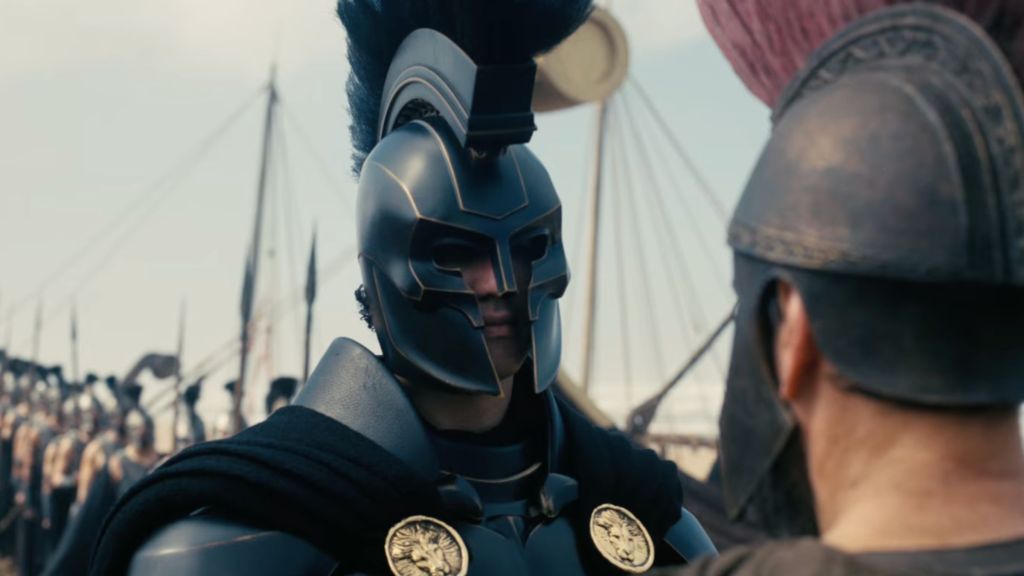
While it’s far from the first adaptation, it’s by far the biggest-scale version of the beloved novel, with the 70mm cinematography beautifully capturing the grandiose storytelling, both physically and psychologically. Whether it’s a close-up of Odysseus reckoning with his past or a wide shot of the Trojan Horse being pulled into Troy, every frame has some element of tension that perfectly contributes to the massive scale. The lighting is equally incredible, using natural sources to fully flesh the Greek landscapes. The use of shadows also effectively conveys looming dread while also creating strong color contrast. Christopher Nolan is known for his spectacle, and cinematographer Hoyte van Hoytema knows exactly how to capture Nolan’s large scale while still finding moments of beauty.
Nolan’s films have always had masterful technical aspects, and The Odyssey is no different. The sound work is easily the best you’ll experience all year, using monster noises and movements to convey a sense of horror that Nolan hadn’t delved into in his prior films. It’s suffocating in all the best ways, completely sucking you in despite being tension-fueled with every sound bite. The score is equally compelling, with Ludwig Göransson’s array of instruments giving the film a healthy rhythm that makes the near-three-hour runtime fly by. If there are any Oscars that The Odyssey could easily take home, it’s something in one of the technical categories.
Having so many A-list actors portraying Greek figures could’ve easily come across as distracting, but luckily, everyone knew the task at hand. Matt Damon hasn’t exuded this much aura since the Bourne films, expertly portraying an intelligent, strong-willed soldier who’s also a family man. Like many Nolan films, the ensemble is extremely male-oriented, with performances by John Leguizamo and Tom Holland carrying lots of weight as Odysseus’s servant and Odysseus’s son. Despite this, the true standouts are the women, specifically Anne Hathaway and Samantha Morton. Hathaway’s turn as Odysseus’s wife, Penelope, is the movie’s beating heart, beautifully portraying love and grief sympathetically and driving the film’s most emotional scene. Samantha Morton stunningly portrays Circe’s mysteriousness, which brings tension to any frame she appears in, despite her limited screen time. Nolan has been criticized in the past for his weak writing on female characters, but The Odyssey features some of Nolan’s strongest and best-written women to date.
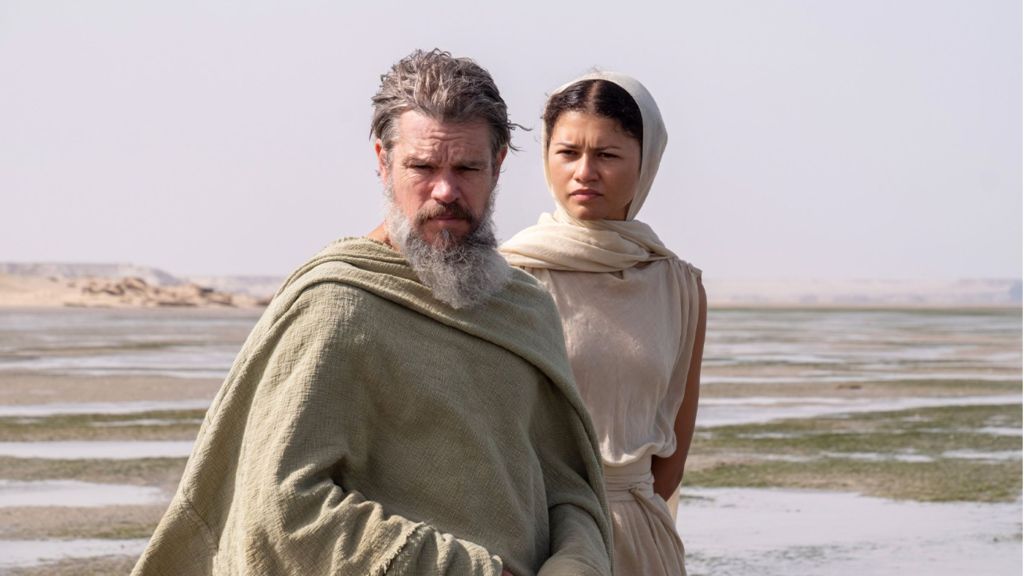
For a movie so driven by spectacle, it’s easy to push the actual storytelling aside, but Christopher Nolan ensures the writing is just as strong. Paralleling Oppenheimer in more ways than expected, Nolan uses Odysseus’s journey home to parallel themes of masculinity, consequence, and family. Nolan takes the idea of men’s necessity to provide and succeed and turns it into a surprisingly intimate look at fatherhood and regret, showcasing that underneath the plates of armor is a man yearning for love and acceptance. The third act particularly nails these ideas, as Odysseus’ journey home leads him to multiple cathartic conversations with different characters. Although the action is consistently engaging, the true substance lies in Nolan’s heartfelt screenplay.
The film is extremely in-your-face with its visual and psychological storytelling, which made the beginning moments difficult to get into at first. Jumping back and forth in time and introducing dozens of characters in the first 20 minutes, the film is feeding you tons of information that is hard to take in on first watch. Once everything is tied together by the end and the overall takeaways are presented, it justifies the chaotic first act and makes for a more rewarding rewatch. However, it is difficult to overlook how jumbled the opening moments were, and there’s a chance that audiences may not respond well to it.
The Odyssey delivers on every front; a grand spectacle that is equal parts thrilling and heartfelt. Despite being based on a century-old story, Christopher Nolan’s execution makes the film feel fresh and original, pushing the boundaries of what filmmaking can achieve. Some may be overwhelmed by the Greek mythology and storytelling, but by Christopher Nolan’s standards, it is hard to think of what could’ve been a better follow-up to Oppenheimer than this.
The Odyssey will be released in theaters nationwide on July 17.
Rating: 9/10
Oscar Prospects:
Best Picture, Best Director, Best Actor, Best Supporting Actress, Best Adapted Screenplay, Best Cinematography, Best Editing, Best Production Design, Best Costume Design, Best Original Score, Best Makeup/Hairstyling, Best Sound, Best Visual Effects, Best Casting


Leave a comment