
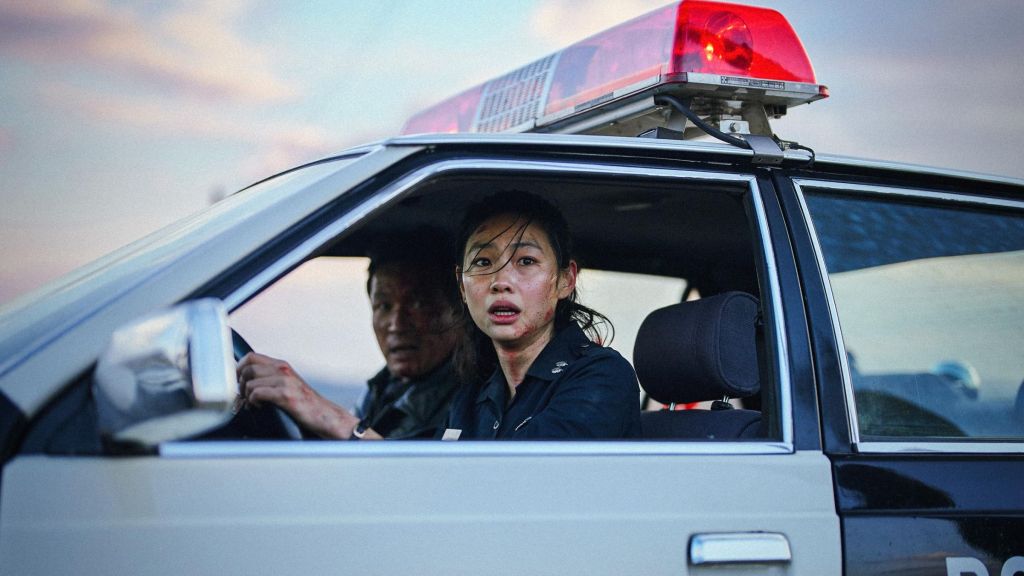
Na-Hong Jin is far from a household name. Despite making critically acclaimed films like The Wailing and The Chaser, Jin is still a relatively unknown filmmaker to the average moviegoer. However, NEON seems to recognize his box-office potential, as the studio gave him the highest budget ever for a Korean film to make an original monster movie. Being in production for nearly a decade, this was a passion project for Jin, and that is depicted in every frame of Hope.
The film follows police chief Ko Bum-seok, played by Hwang Jung-min, who discovers that an unkillable creature has attacked his town. With only the help of his rookie deputy and other citizens of their village, Bum-seok attempts to stop the monster from causing more harm while discovering how the creature came to be. Using everything at their disposal to save their town, Hope is nonstop monster action, for better and for worse.
For monster movies, it’s best not to overcomplicate things in terms of the premise, and Jin understands that within his screenplay. Especially in the Monsterverse franchise, recent monster movies have tied in subplots about humans trying to use and experiment on the monsters, and every time this is implemented in the script, it drags the film down immensely. Luckily, Hope does not do this in the slightest. The film focuses solely on the citizens of Hope Harbor trying to survive and fend off the monster wreaking havoc on their town, never deviating into a separate subplot. While this may feel like an obvious move, prior monster movies made this choice a refreshing change of pace.
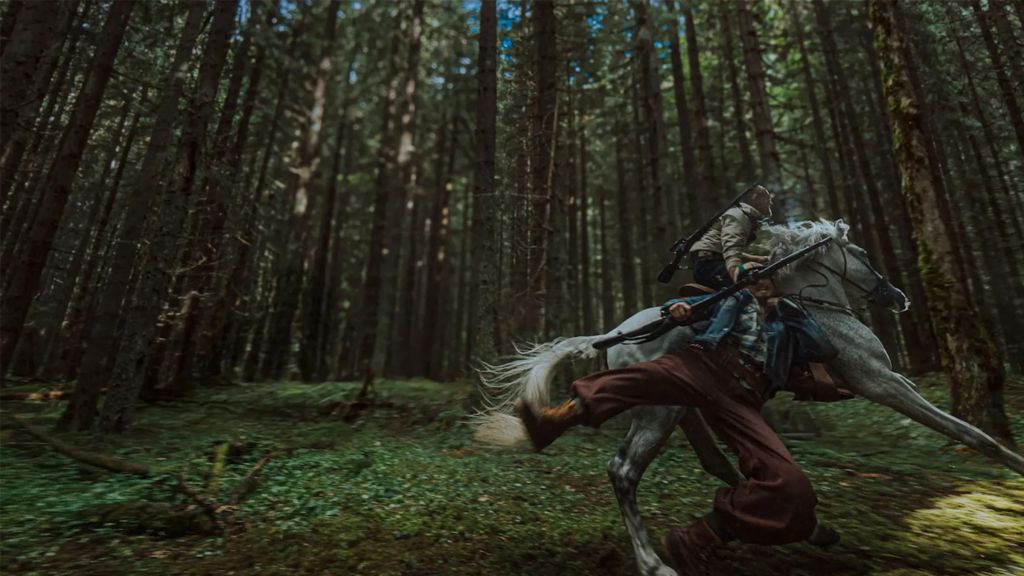
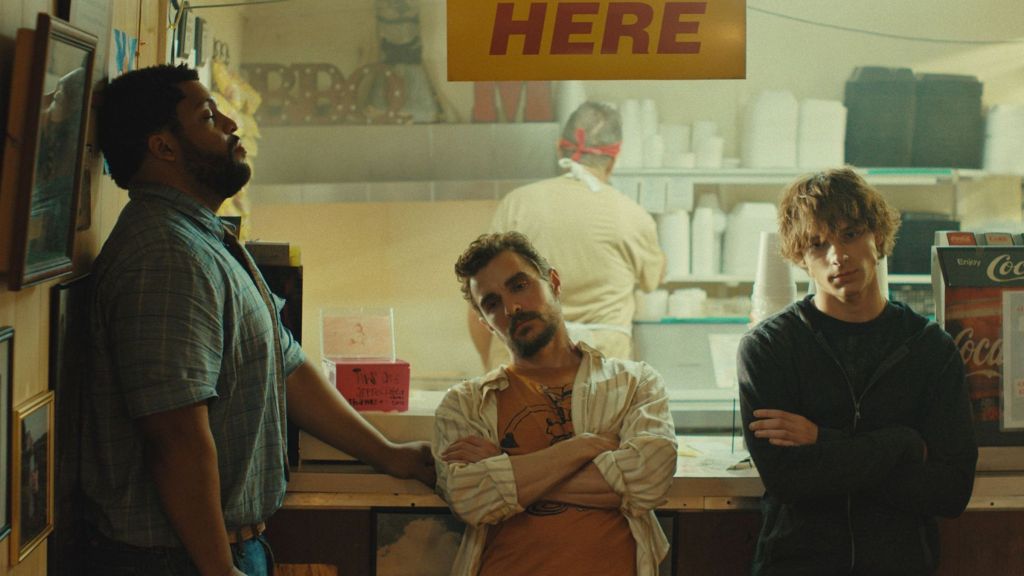
Although Hope lacks the gorgeously haunting visuals of Jin’s previous movies, it still features plenty of stunning imagery. The tracking shots beautifully portray the frenetic pacing while conveying the danger of every scene. Cinematographer Hong Kyung-pyo shoots the movie like a western, with wide shots of actors standing still that feel ripped straight from a Sergio Leone film. The inclusion of horses also enhances the western feel while delivering monster action like we’ve never seen before. The production design allows for more immersion, with the use of color and practical sets making for an inviting experience to the audience despite the horror that ensues. Jin has proven time and time again that he is a master at staging a scene, and Hope once again proves this point.
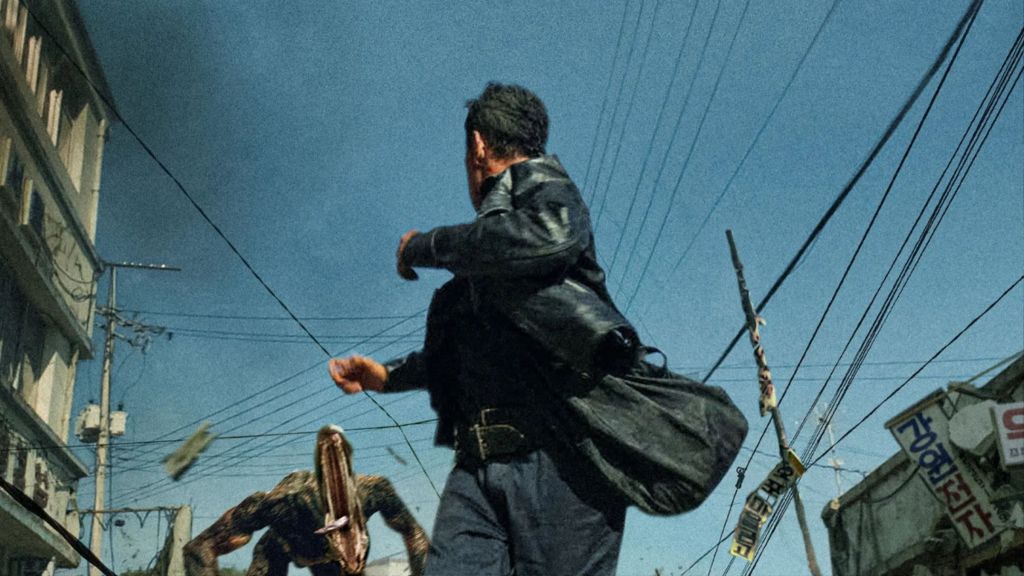
The film skillfully conceals the monster’s appearance for most of the first act, creating an excellent blend of horror and anticipation. Sadly, the creature’s reveal lacks the excitement and intrigue built up from the beginning. Jin’s decision to give the monster human characteristics diminishes the horror. Instead of being disgusted in a positive sense, you’re left pondering how exactly one is supposed to feel about the creature, which is not what you want to see from something you’re supposed to be scared of. It doesn’t help that the visual effects are horrendous and fail to blend with the backdrop in any way. In terms of monster reveals, there aren’t many in recent memory that are as bad as the one in Hope.
It’s not just the monster reveal that tarnishes the movie; it’s everything about the monster that’s the problem. Visual effects aside, the monster moves more like an animated character than a practical being, which makes its attacks look way too goofy, almost paralleling the way Glen runs in Seed of Chucky. The film also tries to humanize the monster, with Jin using it as a catalyst for climate change, which makes what was already frustrating even more so. With the movie already having a simple, Hope would’ve been better off letting the monster be a speechless, inhumane being.
At nearly 160 minutes, the film moves at an incredible pace, rarely giving the characters any moments of peace. While this created some fun sequences, at times the movie started to feel repetitive. The film is littered with characters barely escaping situations, and because of its lengthy runtime, it became obvious which characters made it out and which didn’t. This made some action sequences feel less tense, especially in the final act, when the monster repeats the same action numerous times in a row. For a movie with such a simple premise, there’s no reason to stretch it to a near-three-hour runtime.
One doesn’t expect extremely compelling characters in a monster movie, but if you’re making one that’s three hours long, it should be expected that there are at least a few characters that the audience can grow to love. In Hope, there are sadly none. Every character acts more like an archetype rather than an actual person: a selfish police officer, a young but strong-willed deputy, a badass sharpshooter. Although these are far from poor character choices, the film gives no reason to care whether they get out alive. Normally this isn’t an issue, but with how the film ends, it is apparent that the audience was supposed to have some attachment to the characters, but there was nothing there.
On an action level, there are some truly awe-inspiring sequences, but in terms of character and story, Hope struggles heavily. With one of the worst creature designs in recent memory, the film had the potential to be a new monster movie classic, but a slew of baffling decisions prevent it from reaching the heights of other films in its genre. Na-Hong-Jin may gain more fame from the movie, but his film is bound to be his most controversial.
Hope is now playing in theaters nationwide.
Rating: 5/10
Oscar Prospects:
None.


Leave a comment