
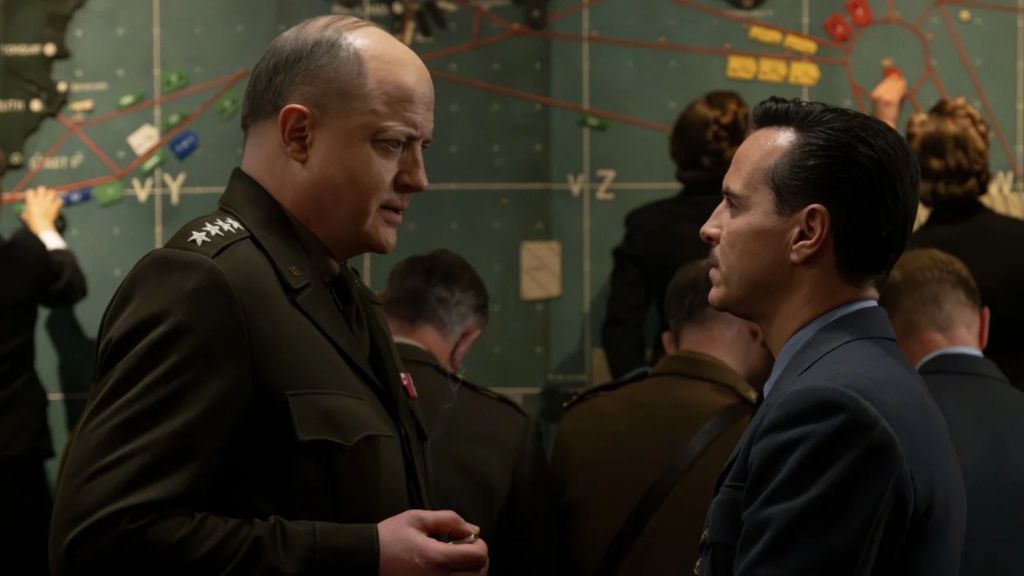
Movies about D-Day aren’t hard to come by whatsoever. From grand-scale epics like Saving Private Ryan to Oscar darlings like Patton, a quick search on your Smart TV will likely give you countless results. What’s difficult to find is a feature-length film that dives into a largely undisclosed aspect of D-Day. Director Anthony Maras hopes to do so with his latest feature, Pressure. Told over a three-day period before the storming of the beaches of Normandy, the film discusses the importance of the minute details of the attack in a concise and entertaining manner.
The film follows stone-cold meteorologist James Stagg, played by Andrew Scott, who is hired by General Dwight D. Eisenhower to predict the weather for their planned attack. What is usually a simple task for Stagg soon becomes a history-defining moment as he is forced to decide between risking the lives of thousands of soldiers or delaying the attack, which could cause the end of the war and the surrender of entire nations.
Anyone who knows even the slightest details about D-Day will likely already know how these events play out, but Pressure successfully manages to deliver tension and entertainment through its brisk 100-minute runtime. The film immediately begins with the hiring of Stagg and does not let up until the results of Stagg’s findings are revealed, running through a variety of conflicts to keep the pace moving. The weather may not sound interesting at face value, but the film does an excellent job of explaining how important it is for the weather to be calm enough for their attack, giving the film a strong dilemma that otherwise wouldn’t be there.
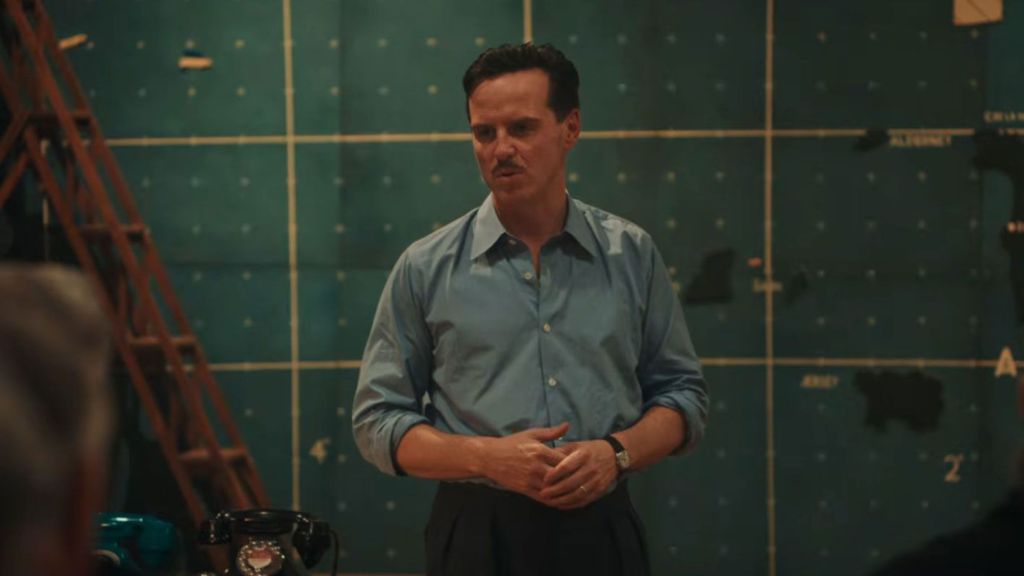
On paper, Pressure lacks the material to justify a theatrical runtime, but the dialogue and performances elevate it to grand, entertaining heights. Andrew Scott is excellent as the meteorologist determined to make the right decision for his country, even if it causes conflict between his coworkers. Despite his bluntness, Scott brings an element of charm that makes it easy to root for him. The film also gives him a heartbreaking subplot involving his pregnant wife, which lends him more empathy and makes for a well-rounded protagonist overall. While not as strong as Scott, Brendan Fraser gives a compelling performance as Dwight D. Eisenhower. While his outbursts weren’t as effective as they should’ve been, his physical presence and the relationship he builds with Scott’s Stagg are among the film’s many highlights, and part of that is because of Fraser’s performance.
Despite tackling serious subject matter, the film includes excellent moments of levity, most of which come from Chris Messina’s portrayal of Irving P. Krick. Krick is as driven a meteorologist as Stagg but has a far more laid-back approach, focusing more on making his colleagues happy than on the precision of his findings. Messina oozes charisma in every frame, with a piano scene in particular showcasing his strengths as a performer. Acting as a semi-antagonist, his loud-natured self acts as the perfect opposition for Stagg, yet still manages to be lovable. While there may have been better performances in the ensemble, Messina’s work as Krick was the most impressive.

The dialogue does a good job of dumbing down weather terminology in a digestible way for modern audiences, but at times, the drama felt more like a soap opera rather than something that actually happened. The angry outbursts from the military men, in particular, came across as overdramatic and silly, leading to drastic tonal shifts at numerous points. A scene involving a sudden thunderstorm was another example of this, but was arguably more detrimental to the film because moments of corniness occurred during one of the biggest scenes.
Despite the film’s best efforts to make its small-scale story feel grand, by the end it still appeared small in scope. The fast pace keeps the film enjoyable from start to finish, but it also makes the events feel less urgent. Although it’s hard not to feel entertained as the film concludes, entertainment can only go so far without deeper substance to leave the viewer with, and that’s the exact case with this film.
Pressure may not have the most interesting plot, but its singular take on D-Day and overall compelling filmmaking make for a watchable experience. Despite some overdramatized sequences, the stellar acting makes what could’ve been an incredible bore a worthwhile watch. The film is best described as an above-average streaming-service film; one that will keep you entertained but will likely be forgotten within 24 hours.
Pressure will be released in theaters nationwide on May 29.
Rating: 6/10
Oscar Prospects:
None.






Leave a Reply