
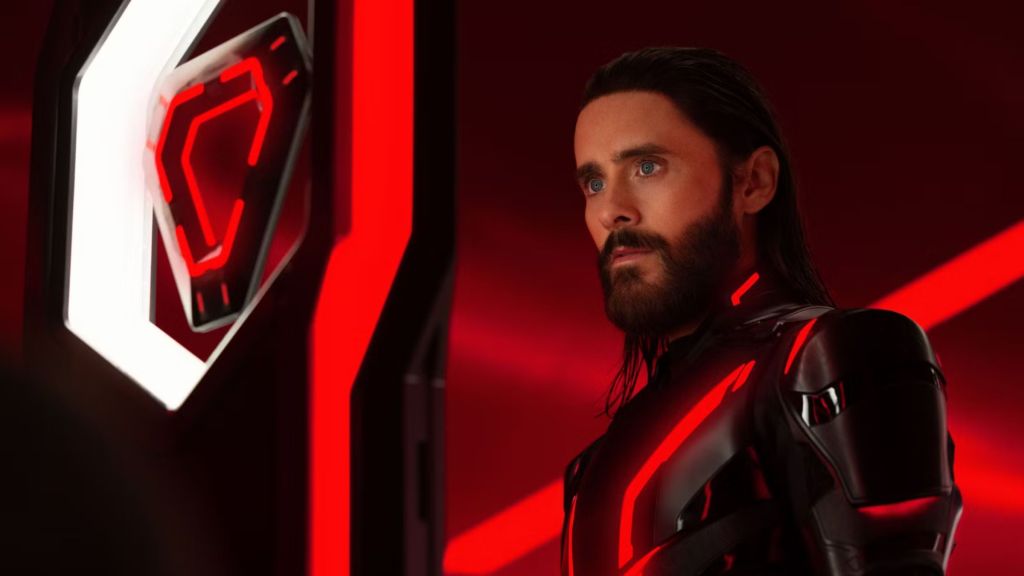
Despite releasing only three films over 43 years, the Tron franchise has made an incredible impact on the film industry. Tron was a landmark achievement in visual effects as it was one of the first films to ever use CGI. While Tron: Legacy wasn’t nearly as groundbreaking as the original film in terms of filmmaking, it jump-started the career of Joseph Kosinski, who went on to create the Oscar-winning Top Gun: Maverick and, most recently, F1: The Movie. The film also gave birth to one of the most iconic sci-fi soundtracks of the century, courtesy of Daft Punk. With the cultural impact of the other Tron movies, anticipation for Tron: Ares became all the more exciting.
Tron: Ares takes place 15 years after Tron: Legacy, and follows Eve Kim, played by Greta Lee, as the new CEO of ENCOM. The film once again pits ENCOM against Dillinger Systems as they race to bring digital constructs from video games into the real world. Jullian Dillinger, played by Evan Peters, found a way to create digital constructs that last only 29 minutes before deteriorating, but he cannot make them permanent. In an attempt to find permanence, he creates an AI program called Ares to search for a permanence code potentially stored in one of Kevin Flynn’s old computers.
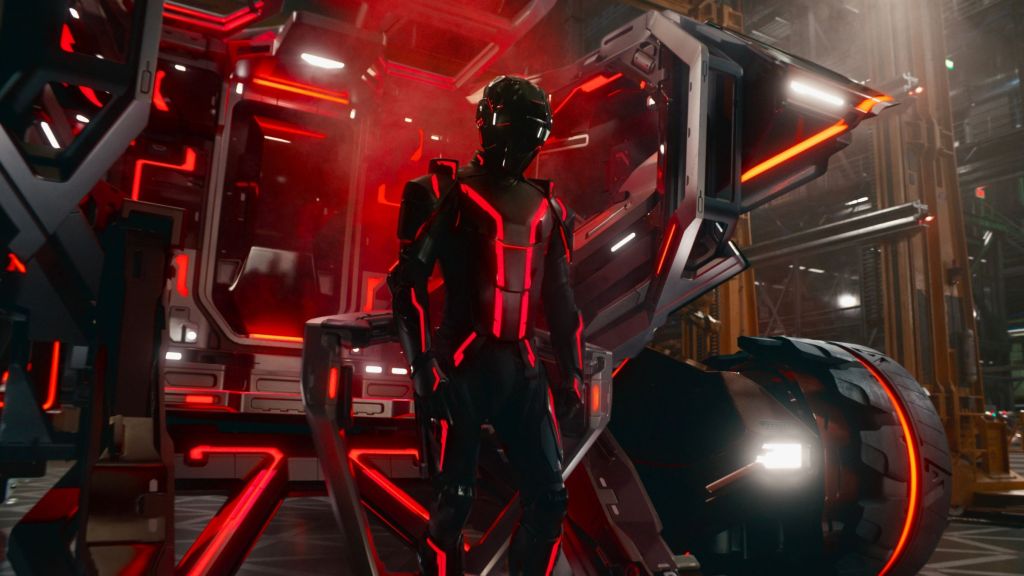
What makes the Tron movies stand out among other sci-fi spectacles is the Grid. The neon-soaked, futuristic setting makes for some of the most memorable set designs in film. Tron, as well as Tron: Legacy, both do an amazing job of world-building and creating a universe that’s easy on the eyes. While Tron: Ares has its moments in the Grid where the spectacle really pops, its focus on the human world makes for a far more forgettable experience. The production design of the human world is stripped of color, which makes for a striking balance with the Grid, but it lacks the gravitas the Tron films are known for. Making a Tron film take place mainly in the human world is perhaps the worst thing you can do, and Tron: Ares sadly does it.
The scripts for the previous Tron movies don’t delve deep into ideas of technology or greed, and Tron: Ares is perhaps the most egregious of them all. For a movie whose protagonist is an AI program, it has shockingly nothing to say about the topic. In a time when AI is an extremely hot and controversial topic, not taking a stance on how AI should be integrated into society is extremely dangerous, especially from a company like Disney. An AI program, Athena, also serves as one of the film’s villains, and the fact that their conflict goes no deeper than punching and kicking is appalling.
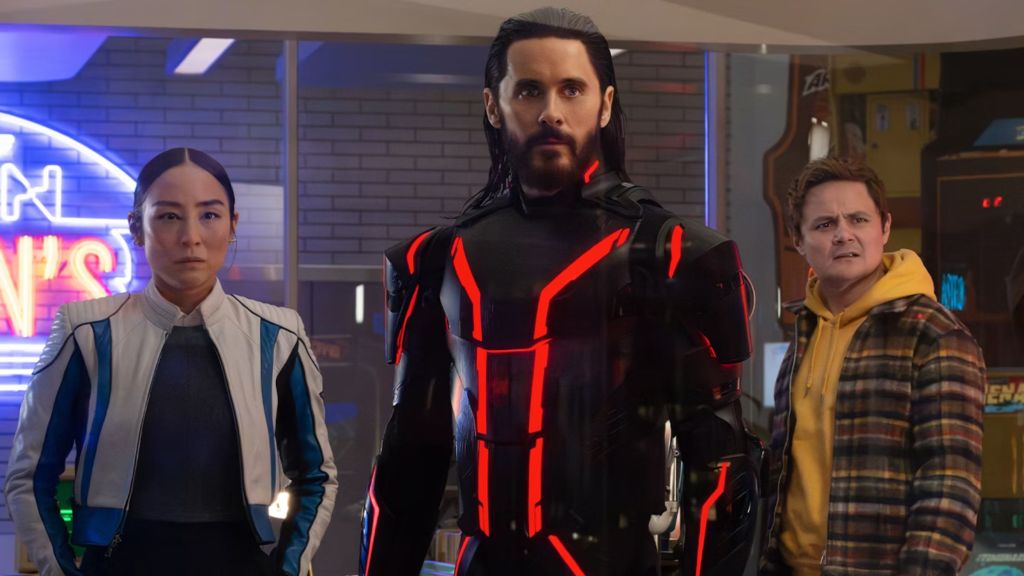
The acting is shockingly weak for the film. Greta Lee, who has given numerous worthy performances in the past, is sleepwalking through the film. Eve is meant to be a driven, bad-ass, motorcycle-riding CEO, but she plays the character incredibly unconvincing with no emotional depth. Her character grapples with her sister’s death, yet Lee portrays her as if she barely knew her. Evan Peters’ performance as Julian feels more like a silly James Bond villain than a threatening tech CEO. While the film wants him to be an intimidating presence, Peters plays it far too over the top. Jared Leto gives the film’s strongest performance as Ares. Leto has always been keen to play strange characters, including the Joker in Suicide Squad and Paolo Gucci in House of Gucci, and his role as Ares is no different. The role plays heavily into his strengths as an actor, allowing him to be as off-kilter as possible without seeming out of place.
Most blockbusters nowadays aim to offer audiences a full range of genres in one movie. Tron: Ares continues the trend by blending sci-fi, action, drama, and comedy into one film. The sci-fi and action elements are easily the strongest of the genres, with cinematographer Jeff Cronenweth and the visual effects team driving the scale to epic proportions, crafting numerous riveting set pieces. The comedy and drama, however, are horribly handled. The film’s comedic elements are entirely through dialogue, and every time it tried to be funny, it brought the film’s pace and tension to a screeching halt. The drama is also extremely lackluster, with an overabundance of characters and thinly written conflicts. As much of a visual feast as Tron: Ares is, the writing drags the movie down immensely.
Much of the marketing for Tron: Ares revolved around Nine Inch Nails providing the film’s soundtrack. While this appeared to be a strange strategy at face value, after watching the film, it is completely understandable why Disney decided to focus on them. Their music elevated the film to extreme heights, giving it a frenetic pace while contributing to the sci-fi genre. Nine Inch Nails’ blend of different instruments and tempos made for an unpredictable listening experience that sparked interest where the story didn’t. The musicians proved, with their work in Tron: Ares, that their five-year wait without releasing an album was worth it.
Tron: Ares may be a treat to the eyes and ears, but whenever a character utters a word of dialogue, it is perhaps the worst thing that the film has to offer this year. For a film that involves corporate greed and AI, it has shockingly little to say about either.
Tron: Ares is now playing in theaters nationwide.
Rating: 5/10
Oscar Prospects:
Best Sound, Best Visual Effects, Best Original Score





Leave a Reply