

Brendan Fraser has had quite a career in acting. Becoming a blockbuster action star in the 1990s with films like George of the Jungle and The Mummy franchise, Fraser was once one of Hollywood’s biggest stars. He then steered away from big studio projects in the 2010s, appearing only in a couple of TV shows and a few poorly received straight-to-VOD movies, such as The Poison Race and Line of Descent. The 2020s, however, saw a major comeback for Fraser, winning Best Actor for his performance in The Whale and appearing in Killers of the Flower Moon, which went on to receive 10 Academy Award nominations. Rental Family is the next film in Fraser’s line of comeback roles, and is perhaps his strongest work to date.
Rental Family explores the largely unknown world of Japan’s rental family businesses, which match actors with stand-in roles for strangers across Tokyo. Fraser plays Phillip Vandarpleog, a struggling actor who finds purpose in the family’s rental business. Although Fraser tackles multiple clients, the film mainly focuses on the bond he forms with Kikuo Hasegawa, an eighty-year-old retired actor played by Akira Emotio, and Mia Kawasaki, a young girl with an absent father played by Shannon Gorman. What starts out as innocent interactions turns into something much deeper and sentimental thanks to the incredible acting on display.
Brendan Fraser delivers what is easily one of his best performances in Rental Family as an actor struggling to find his place in the world. Whether he is taking on an acting role or sharing a conversation with a coworker, he conveys a warmth and love that few actors could match. One glimpse at his smile could melt the hearts of thousands. As an actor whose real-life conflicts overshadowed his acting career for over a decade, it is clear that Fraser finds so much of himself in Phillip, which allowed him to fully flesh out the character and bring it to new heights. An interview scene at a school particularly stands out as one of Fraser’s best-acted scenes in his career, in which he delves into the love he shares for one of his clients in an extremely endearing way. It may not be as flashy a character as he was in The Whale, but the sympathy and subtleties that he brings to the character make it one of his best performances yet.
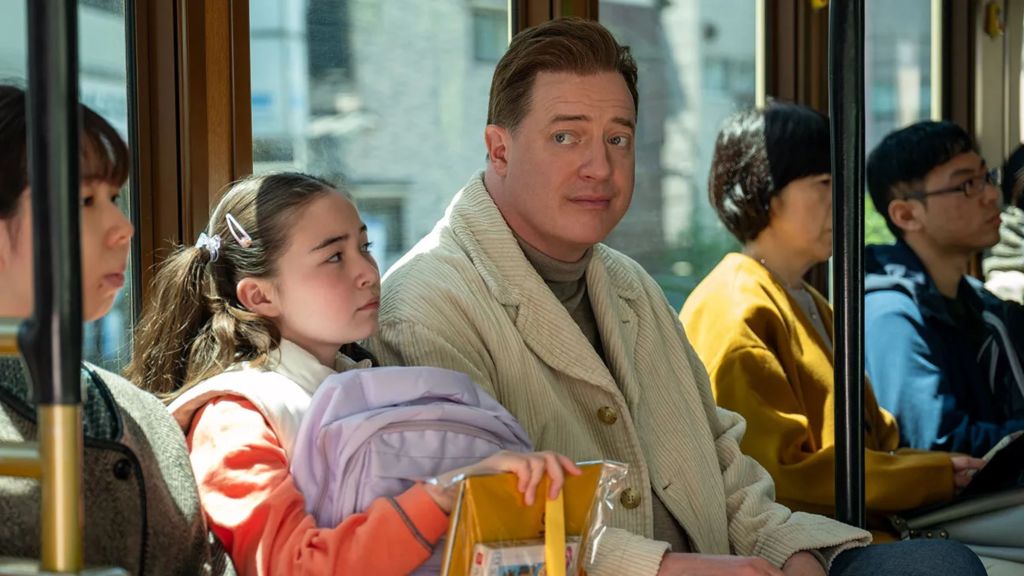
Although Fraser is the clear standout, the acting across the board in Rental Family is phenomenal. Akira Emoto brings Kikuo to life with a complex, lovable portrayal. Similar to Fraser, the character parallels many aspects of Emoto’s life, as both are actors with over 100 credited acting gigs. What starts out as a charming and hilarious character becomes something far more emotional by the end as he slowly reveals his layers. A sequence at a tree in which Kikuo reveals the source of his loneliness in one of the film’s most heartbreaking moments. As a 76-year-old man, he brings the charm and wit of a young adolescent, making for one of the standout supporting performances in the film.
Mia Kawasaki could’ve easily been the “emotionally manipulative” character of the movie, but Shannon Gorman captures the fatherless child in such a sincere manner that there was no ounce of manipulation in sight. Gorman successfully blends an emotionally intelligent character with a childlike nature, making her always watchable. Towing the line between overtly childish and impossibly mature is extremely difficult for a child actor, but Gorman finds common ground in one of the strongest performances in the film.
The film delves deep into the idea of loneliness, especially in Japanese culture, but does so in a manner that anyone can empathize with. Whether it stems from family conflict or relationship drama, the film dissects the different aspects of loneliness and how it is a universal feeling. While this idea yields numerous emotional sequences, the film wraps up with a warm, comforting hug, exploring the importance of love and family. The clients and rental family workers find they have more in common than they initially thought, embracing each other’s loneliness and stating they don’t have to fight their internal battles alone. Taking this storytelling path may feel obvious, but the committed performances and earnest script make the journey feel incredibly authentic and satisfying.

Hikari adds so much life to the film in her directing style. Her love for her home country is evident in every frame, whether through visual storytelling or sympathetic dialogue. Cinematographer Takuro Ishizaka captures Japan’s beauty through vibrant color and sweeping landscape shots. Most slice-of-life dramas fail to compel with their cinematography compared to the dialogue, but the two are equally compelling. The score by Jon Thor Birgisson and Alex Somers also stands out, with its quiet instrumentals conveying the film’s dramatic and sincere tone beautifully.
While Rental Family has all the elements of a best-of-the-year film, aspects of the script keep it from reaching those heights. The film spends much of its runtime on the relationships Phillip builds with his clients, and although it yields many emotionally potent moments, other characters feel pushed to the background. The other rental family workers, Shinji and Aiko, played by Takehiro Hira and Mari Yamamoto, are given backstories about the sources of their loneliness, but aren’t given nearly enough depth compared to the rest of the characters. Shinji, in particular, is given a shocking twist in the latter half of the film, but the film never explores it beyond that initial moment. If the film had offered a couple of extra scenes that delved into Shinji and Aiko’s psyches, then the film could’ve reached far more emotional heights.
Despite some shortcomings in the script, Rental Family is a heartwarming crowd-pleaser, carried by a stellar ensemble and Hikari’s competent filmmaking. It may not be the Oscar hopeful many were expecting, but it has more than enough to warrant a theatrical runtime. The “Brennaissance” is alive more than ever.
Rental Family will release in theaters nationwide on November 21.
Rating: 7/10
Oscar Prospects:
Best Actor





Leave a Reply