

Joachim Trier has been making critically acclaimed films for nearly two decades, but didn’t receive major award recognition until The Worst Person in the World, which scored nominations for Best Original Screenplay and Best International Feature at the 2022 Academy Awards. Hot off the success of that film is Trier’s latest, Sentimental Value, which looks to be an even bigger Oscar contender than his last movie.
The film follows Gustav, played by Stellan Skarsgård, a renowned film director who attempts to reconnect with his daughter Nora, played by Renate Reinsve, by casting her as the lead in his upcoming film. His movie centers heavily on his life and relationship with his family, causing tension between the two, as well as with his other daughter, Agnes, played by Inga Ibsdotter Lilleaas. Throughout pre-production, the family discovers aspects of one another that change how they view each other.
Largely set in the confines of their family home, the film somehow manages to make its low-level stakes feel grand. Although no one’s life is on the line, the drama is extremely consequential, with Trier’s writing and directing adding a lot of levity to the characters and their relationships. Even though the audience isn’t shown what their lives were like when they were younger or why the daughters have such an estranged relationship with their father, the performances make it seem as if the audience has grown up with the characters, making the conflict feel more nuanced and organic than in the average drama.
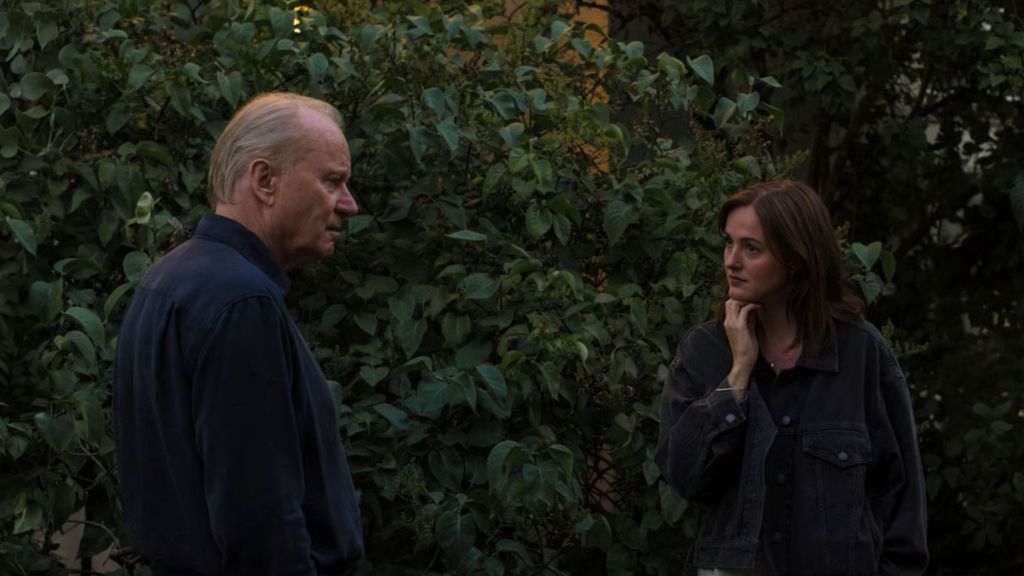
There could be no more perfect title for the film than ‘sentimental value’. Whether it’s the spiritual relationships the characters have with one another or the physical attachments they have to belongings, the film explores the value humanity places on a variety of things. Their childhood home is one of the film’s most poignant representations of sentimental value, serving as a character in its own right as the characters try to maintain it as it rots away. The house also acts as a representation of the family’s rocky relationship with one another, unstable and unpredictable at every turn. Not since 2019’s Parasite has a house played such an integral role in the storytelling.
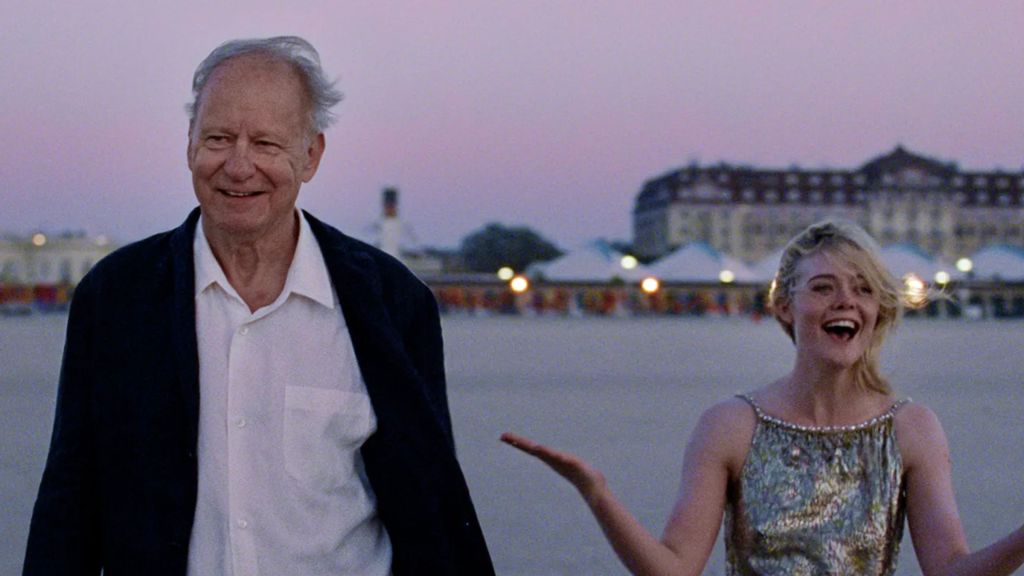
As if the tension between the three family members isn’t enough, here comes Rachel Kemp (Elle Fanning), a popular American actress cast in the role Nora turned down. The role of an American celebrity could’ve easily been portrayed as a snarky egotist, but Fanning portrays the character with intelligence and self-awareness. She conveys the bubbly, likable traits of a movie star while retaining the complexity of every other character in the film. Much like Nora, she is contemplating her choice to play the lead role, but in Rachel’s case, she is more conflicted about playing a role clearly written for someone else. The emotional intelligence Fanning displays is an absolute force to be reckoned with, and a scene where she practices her lines for the film perfectly captures her vast range as an actress. Although she’s had numerous iconic roles in the past, Fanning’s work in Sentimental Value might be her best yet.
The entire cast delivers some of the year’s best performances in their respective categories. Inga Ibsdotter Lilleaas is excellent as the younger sister who chose to ignore her trauma in favor of having a normal life. Her performance is much quieter than the rest of the ensemble’s, but she leaves a major impact on the film and its depiction of familial trauma. Renate Reinsve was deserving of an Oscar nomination for her work in The Worst Person in the World, but her performance in Sentimental Value is even better. In contrast to her sister, Nora takes a page from her father’s handbook, devoting her life to her career rather than building relationships with those around her. She is also a more aggressive character compared to her sister, unafraid to call people out when something’s bothering her. The balance between Reinsve and Lilleaas’s characters and their strong performances make for an extremely well-rounded film that covers all aspects of familial trauma, making it extremely easy to relate to.
Arguably, the strongest performance in the film is by Stellan Skarsgård. His character comes across as extremely unlikable at the beginning of the film, only visiting his children when it is convenient for him or in emergency situations, such as the death of his ex-wife and the mother of his daughters. As the film progresses, however, Gustav starts to peel back his layers, expressing his disconnection from human interaction and his belief that filmmaking is how he expresses his emotions. Also delivering a quieter performance, his silence speaks volumes about his character, with his subtle facial expressions carrying extreme emotional weight. Who starts out as a selfish snob and slowly becomes an enriching, empathetic character, and Skarsgård conveys it beautifully.
The film has an interesting editing style, cutting to a black screen for a few seconds as it transitions to the next scene, paralleling to curtains closing between different scenes in a stage play. While this decision may be abrasive to some, it lets individual scenes breathe and lets the audience digest what just happened in their own time, allowing them to pack a bigger punch than other films in the genre.
Although the film delves heavily into family drama and how the relationships we build with one another impact all aspects of life, it truly shines in its depiction of artistic expression. Each character in the film has been heavily impacted by art, ranging from Anges’ brief time as a child actress to Gustav’s current job as a film director, and the film hammer home the idea of art’s impact on society. Whether you are part of making the art or its audience, the film expertly conveys the idea that art is an integral part of society and that, at times, it is the only way people can express themselves. This idea yields many revelatory moments in the film, including a sequence in which Nora reads her dad’s script, which is one of the year’s most emotional scenes.
Sentimental Value is a masterful film, weaving in a multitude of ideas in an emotionally grueling and sometimes comedic manner. From its complex characters to the naturalistic dialogue, family dramas do not get much better than this. Emotionally potent with a cathartic and satisfying final sequence, this easily stands one of the best movies of the year.
Sentimental Value played as a Special Presentation at the Heartland International Film Festival. The film is now playing in select theaters.
Rating: 10/10
Oscar Prospects:
Best Picture, Best Director, Best Original Screenplay, Best Actress, Best Actor in a Supporting Role, Best Actress in a Supporting Role, Best Editing, Best International Feature, Best Casting




 Reel Recommendation
Leave a reply to My Predictions for the 2026 Academy Awards – Reel Recommendation Cancel reply