
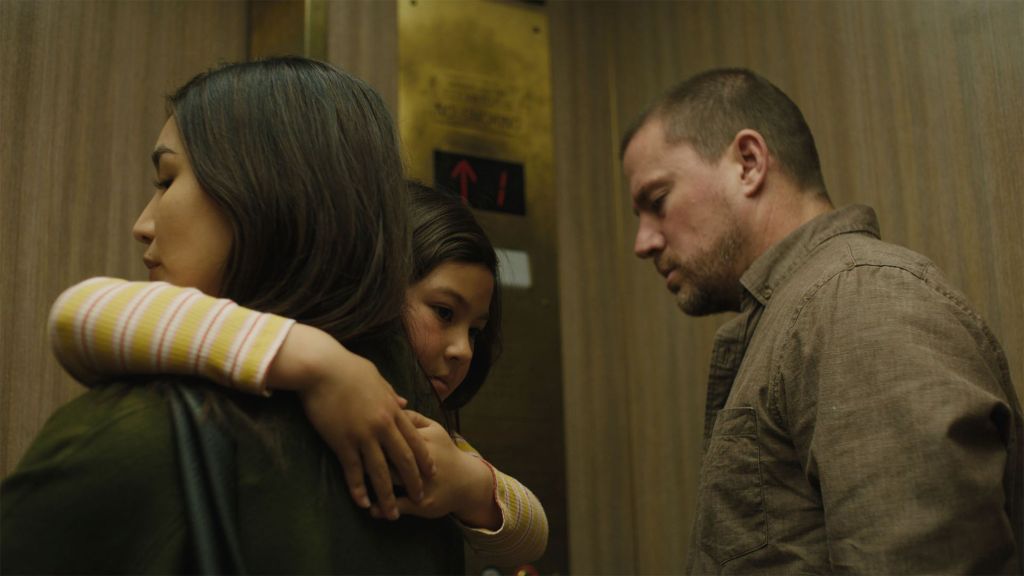
I had three tickets for the virtual Sundance Film Festival. One ticket was for the new Channing Tatum film, Josephine; one was for the narrative Audience Award-winning film; and one was for the narrative Grand Jury Prize winner. I bought tickets for the award-winning films before I knew what they would be, since they sell out so quickly, leaving me with weeks of anticipation about what they would turn out to be. To my surprise, Josephine won both the Audience Award and the Grand Jury Prize, a feat that hasn’t happened since CODA premiered at the festival in 2021. Although I was initially frustrated by the idea of buying three tickets for the same movie, it gave me confidence that I would be bound to see something special.
Josephine follows a family of three, played by Channing Tatum, Gemma Chan, and Mason Reeves, whose life takes a tragic turn after the daughter, eight-year-old Josephine, witnesses a horrific assault during a trip to the park with her dad. Unaware of what she saw, Josephine begins to experience high levels of paranoia while her parents struggle with how to help their daughter, whether it’s shielding Josephine from the truth or teaching her ways to protect herself from harm’s way.
Josephine is one of the most abrasive cinematic experiences in years, fully putting the audience in Josephine’s shoes as they experience the horrors with her. The film throws the audience right into the horrific situation, as we witness an eight-year-old girl frozen in fear as a man abuses and rapes a woman in a public park. Starting the film this way not only establishes its dark tone but also foregrounds Josephine’s perspective. Much like Josephine, the viewer is thrust into a situation no real person wants to be in, building a sense of psychological dread that the rest of the film builds on. Understandably, many will find the film too much in its opening sequences, but for a film tackling the dangers of modern society and parents’ difficulties in navigating these issues with their kids, there is no other way to begin.
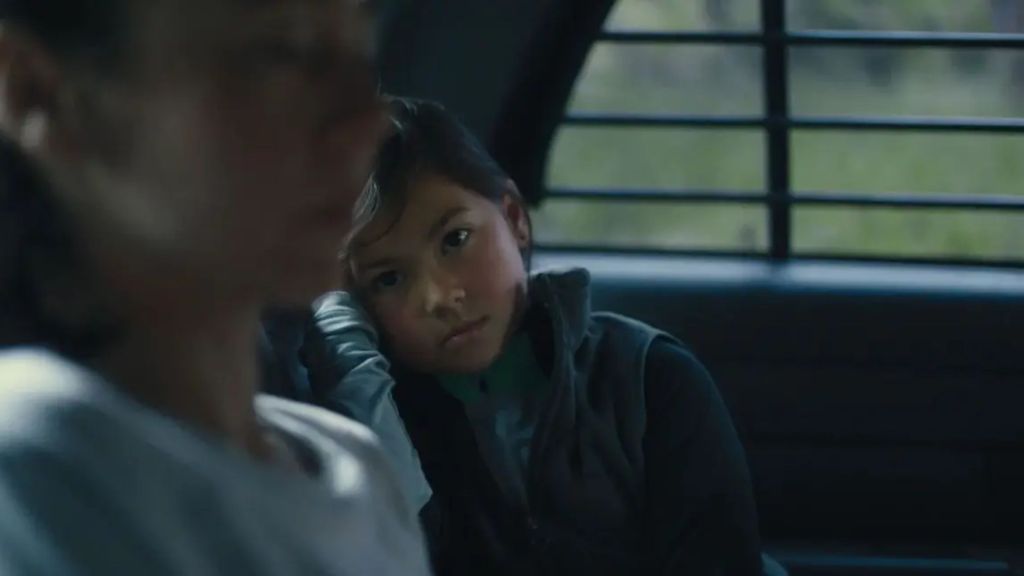
Sadly, the disturbing imagery doesn’t end at the initial assault. The trauma of the event weighs on each family member, who struggles to cope individually and as a family. Although the film attempts to show how each person is handling themselves, Josephine does a good job of keeping the focus on the titular character. Whether it’s the POV shots of Josephine or the camera staying at eye level with her throughout, director Beth de Araújo excellently maintains a central vision for the movie.
The ensemble’s acting is incredible. Despite not being present at the assault, Gemma Chan conveys a deep sadness at what her daughter witnessed, a pain only a mother could experience. Her drive to give her daughter the best made for a compelling performance overall, easily ranking among the best of her career. Channing Tatum has been putting on some of his best work in recent years in movies like Roofman, and his work in Josephine is another to add to that list. Tatum played the protective father to a tee, simultaneously hoping for the best for his daughter while wanting anyone who harms her to suffer. In contrast to Chan, Tatum is entirely expressive of his emotions, sometimes to a fault, and he portrays that complexity incredibly well. Having a daughter of his own, it is no surprise that Tatum was able to bring so much to the role.
Easily the standout acting performance is Mason Reeves as Josephine. In her first acting gig, Reeves shows immense talent, expressing a range of emotions that many adults could never convey on film. From a sense of childlike wonder of the world to having a disdain for everything, Reeves is asked to do a lot as a young actress, and she pulls it off beautifully. Seeing her become enraptured by what she witnessed is extremely disheartening, and she portrayed that psychological pain in such a masterful manner. If the Oscars were today, she would easily be a shoo-in for a nomination, if not a win.
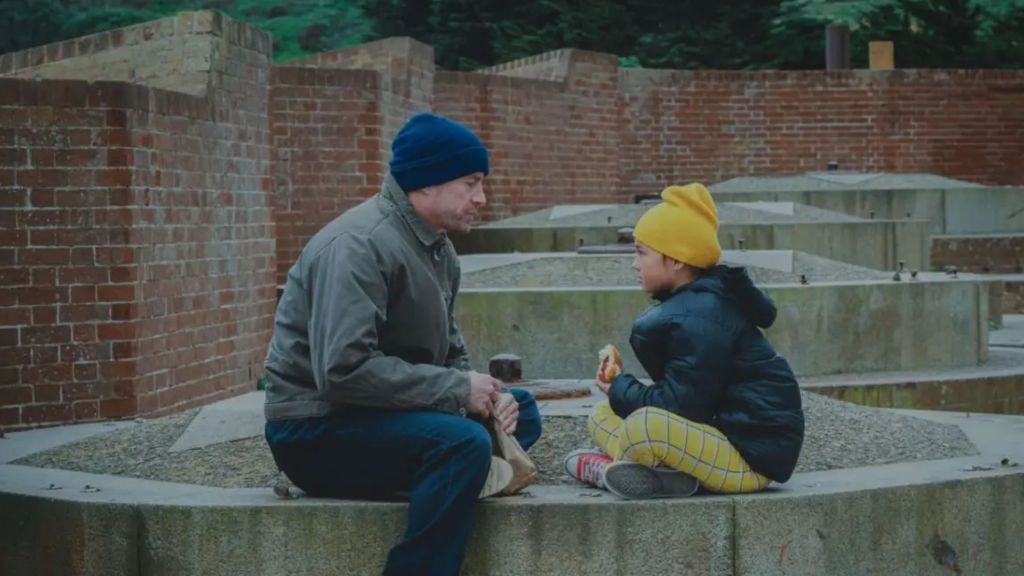
Although Josephine is an extremely depressing two hours, it’s not solely trying to make the audience feel bad for the characters. The film instead makes a blanket statement on the struggles in navigating a world where sexual assaults can happen at a moment’s notice. Much like last year’s Sorry Baby, the film attempts to show the complexities of teaching a child about the world’s issues. Taking the film in this direction made for an excellent conflict throughout, with Tatum’s character seeking justice while Chan attempts to shield Josephine from the world’s harm as much as she can. For a film touching on as delicate ideas as it does, the writing is always honest and never forceful, allowing for a satisfying experience overall.
Scene to scene, the film delivers multiple tragic and powerful sequences, but the ending didn’t hit quite as well as the rest. By the end, Josephine experiences a development that leaves the film on a slightly hopeful note, but it didn’t feel nearly as earned as it could’ve been. Instead of feeling cohesive, the film rushes to her arc. It felt as if numerous scenes were cut that would’ve shown Josephine develop more organically, which made the ending feel sorer than I’d hoped.
Despite its ending and its depressing subject matter, Josephine is undoubtedly a powerful movie that attempts to discuss a topic most filmmakers are too scared to address. With an incredible acting ensemble and unforgettable imagery, Beth de Araújo shows herself to be a filmmaker to watch in this potent, gut-wrenching story that is bound to hit home with anyone, especially parents.
Josephine screened at the 2026 Sundance Film Festival. A wide release date is currently unknown, but will likely see a release in 2026.
Rating: 8/10
Oscar Prospects:
Best Picture, Best Original Screenplay, Best Supporting Actor, Best Supporting Actress
 Reel Recommendation
Leave a comment