
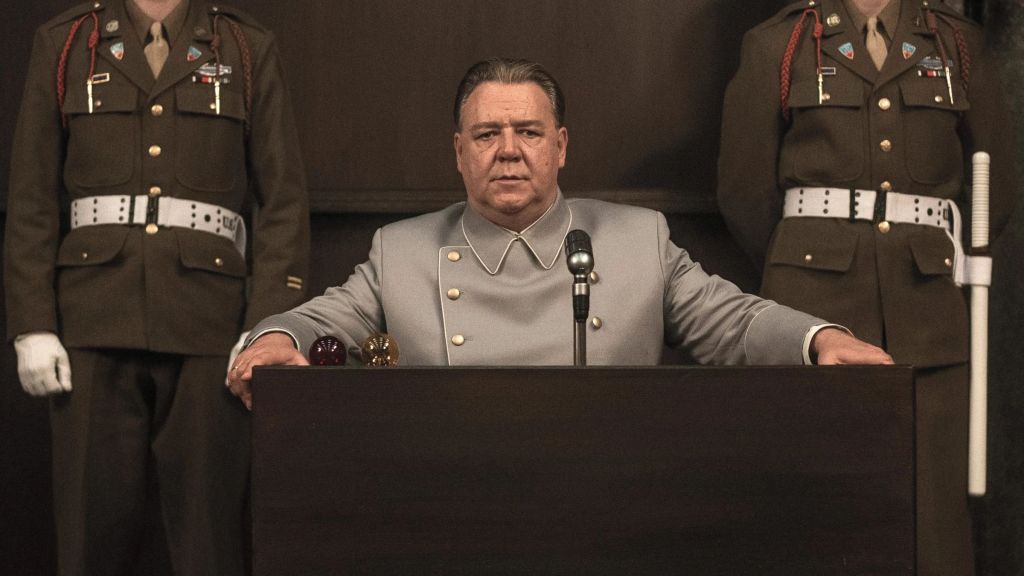
There are at least a couple of movies a year set during World War II. Whether they center on the battlefield or delve into the behind-the-scenes drama, it seems that there is a film covering every aspect of World War II. Nuremberg is yet another depiction of the Nuremberg trials in 1946, but it is adapted from the 2013 book by Jack El-Hai, The Nazi and the Psychiatrist. Although the film delves into the birth of the trial and its eventual outcome, the film centers more on the relationship between Herman Göring and Douglas Kelley.
The film sees Douglas Kelley, played by Rami Malek, evaluate a group of Nazi leaders before they go on trial. Although the trial is meant to define how involved the Nazi leaders were in the extermination camps, Kelley’s job as the psychiatrist for the case is to understand where their evil came from in order to prevent anything like World War II from happening again. During his evaluations, he becomes extremely infatuated with Herman Göring, played by Russell Crowe. Taken aback by Göring’s obsession with Hitler and his speeches, Kelley becomes obsessed with the case, which eventually leads him down a dark rabbit hole.
The film has a fairly standard three-act structure, but the dialogue makes for an infinitely more interesting and engaging experience. Despite the storytelling lacking subversiveness, the screenplay makes for a fast-paced and entertaining ride compared to most World War II films. Moments of heavy drama are beautifully balanced by humor, largely thanks to the ensemble’s charismatic performances. Many war films are too afraid to include comedy, and to see writer/director James Vanderbilt include it in his script made for a refreshing take on the genre.
The opening sequence involving Göring’s surrender not only perfectly sets up the mystery surrounding his character but also conveys one of the film’s central ideas. Göring’s car is surrounded by American soldiers who are pointing guns at him and his family. His movements in the car and his whispered words to his family appear deliberate and calculated, conveying how evil can still grow even after wars are won. Opening the film this way expertly teased the darkness it delved into.
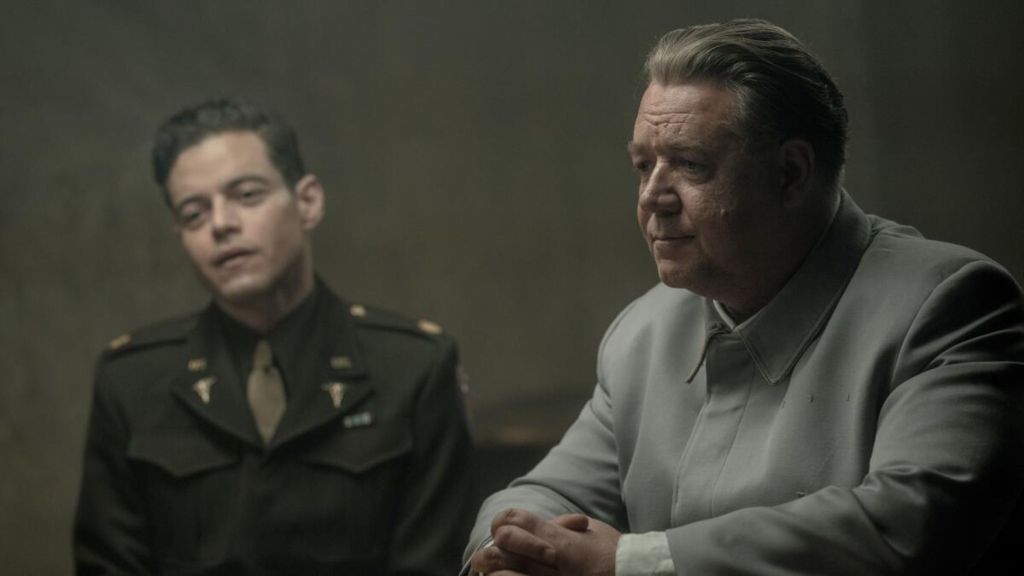
The dialogue does much of the heavy lifting in terms of thematic depth and entertainment value, but the acting pulled its own weight. Rami Malek has proven in films like Oppenheimer and The Amateur that he can play an average man with hints of ferociousness, and that carries over in his role as Douglas Kelley. Malek makes it shockingly believable that someone could become obsessed with the psyche of a Nazi, delivering a powerful performance as a man determined to find the root of evil. Russell Crowe successfully finds humanity in his cold, demented character, portraying Herman Göring as a textured, nuanced figure while still maintaining aspects that make him the horrible person he is known to be today. Scenes of Kelley and Göring going back and forth were among the film’s highlights, as they made two major historical figures seem like everyday citizens.
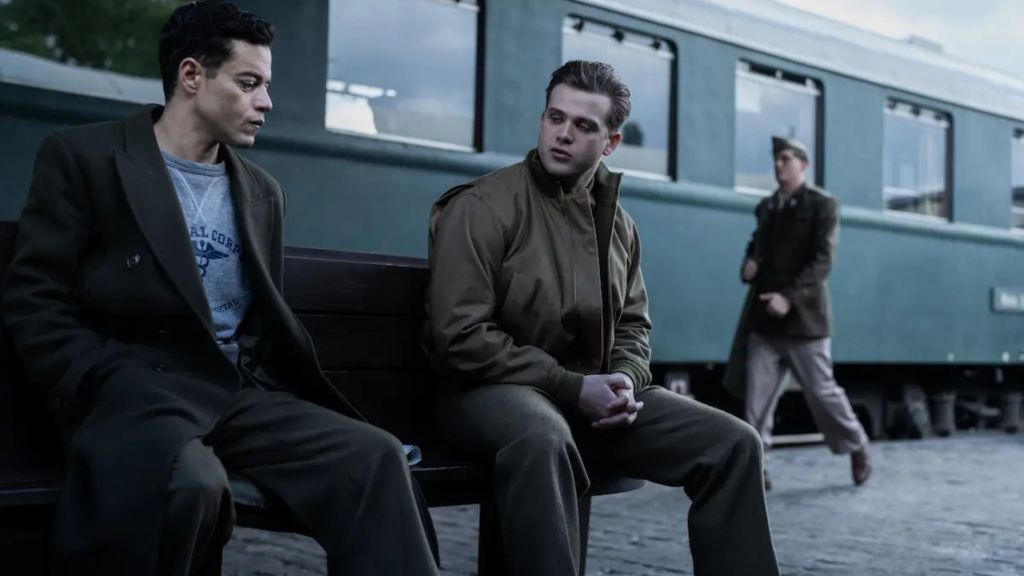
Although Malek and Crowe give some of their best performances in years, it’s Leo Woodall’s turn as translator Howie Triest who makes the biggest impact. Initially serving as Kelley’s translator and colleague, Triest becomes an integral figure in Kelley’s intellectual journey, and Woodall’s performance is a major reason why. A sequence at a train station sees Woodall put his heart out, delivering an emotional monologue about his life that resonates deeply. His eyes alone tell so much of his character, conveying a deep sadness of the world and his place in it. His character may not be participating directly in the Nuremberg trials, but his performance adds poignancy that the film desperately needed.
The film attempts to delve into the origins of evil and how to prevent it from recurring in the final moments, but doesn’t do so in the most compelling way. Most of the film serves as a summary of the Nuremberg trials, which it successfully accomplishes, but when it tries to tie in the timely theme of preventing corruption by the end, it feels too little, too late. Instead of ending with a massive bang like it was attempting to do, it leaves the audience questioning why this idea wasn’t spread throughout the film.
Nuremberg is the kind of old-school, political thriller that modern films lack these days. With a surprisingly tight script for a 150-minute runtime, this film expertly captures the tragedy behind the Nuremberg trials in a timeless manner. It may not have nailed the ending, but the experience is well worth the ride.
Nuremberg is now playing in theaters nationwide.
Rating: 7/10
Oscar Prospects:
Best Actor

 Reel Recommendation
Leave a comment