
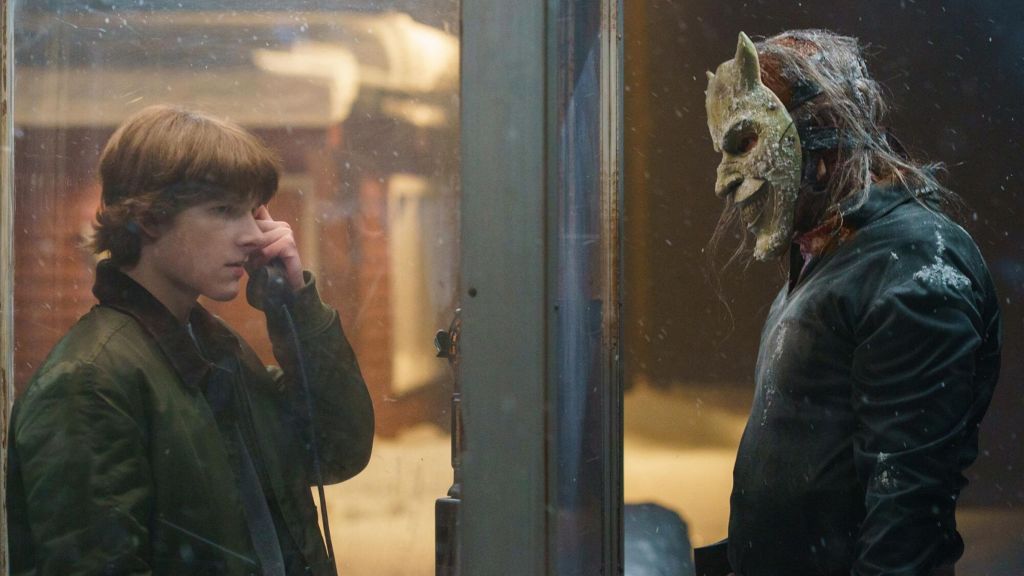
The Black Phone was a surprise hit back in 2022, which saw director Scott Derrickson return to his horror roots after his time in the MCU. The film skillfully blended a kidnapping thriller with ghostly horror, propelling it to financial success, earning $160 million worldwide on an $18 million budget. Black Phone 2 looks to repeat the success of the first film with a larger budget and doubling down on the ghostly elements.
Black Phone 2 sees the return of Finney and Gwen, played by Mason Thames and Madeline McGraw. Struggling to cope with the events of the first film after four years, the two come face-to-face with the Grabber once again after three missing boys start to appear in Gwen’s dreams, which leads them to a winter camp called Alpine Lake. Not only do they learn why the missing boys called for Gwen’s help, but they also discover their ties to the Grabber go deeper than they initially thought.
Black Phone 2 could’ve easily just been a retread of the first film, but Derickson and writer C. Robert Cargill come up with an intriguing way to continue with this set of characters. The Nightmare on Elm Street comparisons are entirely justified, as the film skillfully blends dreams and demons, leaving the audience horrified when a character falls asleep. Even the look of the Grabber draws comparisons to the iconic Freddy Krueger, with a torn-up face that reminds the viewer of how his death occurred in the first film while delivering a terrifying new look for the serial killer. 15 years since the last Nightmare on Elm Street, seeing Black Phone 2 draw so much inspiration from the film was very welcome.
Not only does the film make multiple changes to its story, but it also does so visually. The movie’s winter setting builds a cold, foreboding atmosphere perfectly, with its use of blues and whites bringing the horror and melodrama to life in all the best ways. The heavy snowfall also contributes to the confinement that Gwen and Finney feel, forcing them to face their demons and move forward from their trauma. The movie also uses different types of cameras to distinguish the real and dream worlds, with a digital camera for the real world and a Super 8 camera for the dream sequences. Switching cameras not only brought a unique visual experience, but the graininess of Super 8 film also contributes to the haziness of the dream world. For Gwen, it is sometimes difficult to differentiate what is happening in her dreams and the real world, and the Super 8 camera captures that idea beautifully. With the film set in the 80s, the Super 8 also brought an element of nostalgia, harkening back to an older style of filmmaking.
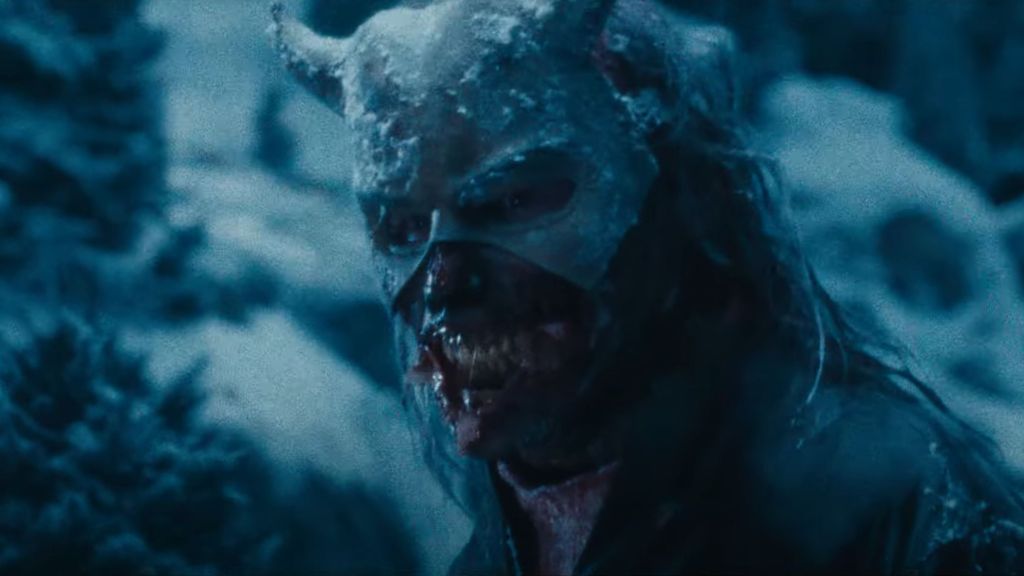
The performances by Mason Thames and Madeline McGraw are once again brilliant. With their characters having far more complex developments than in the first film, Thames and McGraw exude sadness and horror with an extremely empathetic manner, with Thames in particular standing out in the film’s strongest sequence involving his sister and dad outside the cabins, where he lashes out about his loneliness and trauma. Ethan Hawke is just as terrifying as he was in the first film, but his face is almost entirely hidden, which gives Hawke less room to work with. While his tone and physicality convey a terrifying presence, utilizing his face more would’ve done wonders for the film’s horror sequences.
While Black Phone 2 has many elements that stand out above its predecessor, there are also multiple aspects that are executed much worse, one of which is a shift in protagonists. Although the film attempts to give equal screen time to both siblings, Gwen receives far more. Despite McGraw’s excellent performance in horror, her character isn’t nearly as interesting as her brother’s. Gwen’s main conflict consists of her dreams physically and mentally haunting her, which is far less compelling than Finney’s, whose trauma results in him resorting to marijuana usage as well as being overprotective toward Gwen. One of the highlights of the first film is how it balances Gwen’s journey to find his brother and Finney’s experience being kidnapped by the Grabber, and to see this aspect missing in Black Phone 2 was extremely disappointing.
The story is far less compelling compared to the first film. The plot of discovering the three missing boys didn’t leave nearly as big a mark as the first film did, lacking empathy and an emotional payoff. The death count is shockingly low for a film about a serial killer, removing much of the tension that should’ve otherwise been there. For a film mostly set in a summer camp, the decision to make it absent of children outside the main protagonists is beyond baffling. Seeing countless children in danger from the Grabber is what made the first film so horrifying, and limiting the danger to mostly adults in this film made for a frustrating experience.
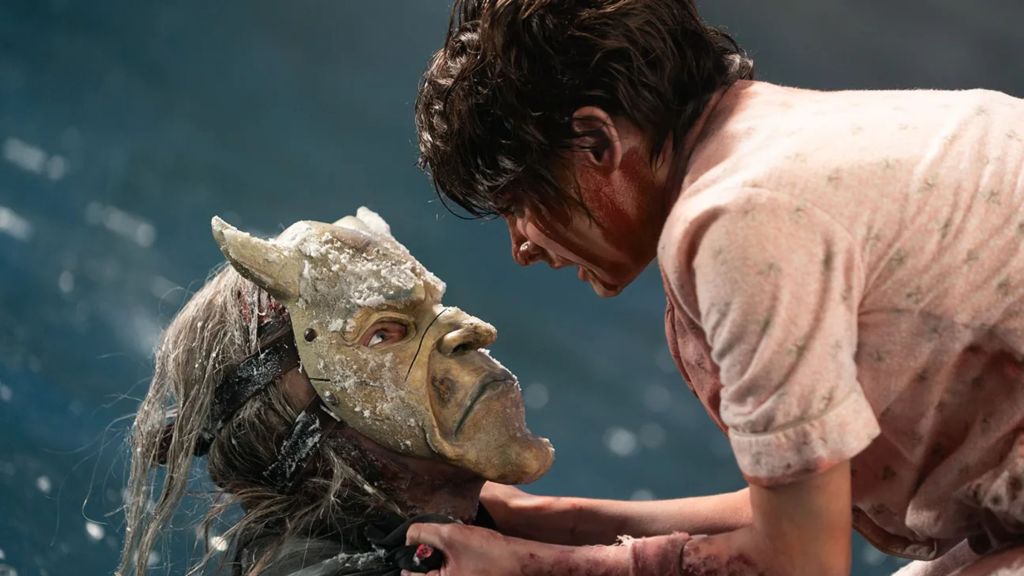
The film also attempts to reveal more of the history behind the Grabber and his killings, but the reveals felt more like excuses to move the plot along than something that organically fits the universe Derickson built. There is a reveal that Gwen and Finney’s mom may have interacted as children, but it is almost entirely ignored in favor of a separate reveal they make later in the film. Although there are many bold aspects of the script that are appreciated, the storytelling felt far less urgent than the original film’s.
Outside of Gwen and Finney, the characters are fairly dull and unlikable. Miguel Mora was a welcoming presence in the first film as Robin, but his inclusion as Robin’s brother in Black Phone 2 is completely unnecessary. Acting as the love interest to Gwen, he contributes nothing to the overall story and barely does anything to help Gwen and Finney get out of their situation with the Grabber. Barb is easily the worst new character in the film, an overtly cartoonish Christian woman who adds an extremely unnecessary conflict for Gwen. Although her character adds moments of humor that balance the film’s horror in satisfying ways, her overall presence weighs the film down.
The climax of the film also stands as one of the weakest elements. While Gwen and Finney complete their arcs in an emotional and satisfying way, the scene’s execution feels entirely rushed. The climax comes surprisingly easily, lacking the tension and stakes the rest of the film had been building toward. Although there is a solid amount of violence that ensues during the climax, the stakes aren’t nearly as big as they should’ve been.
Although Derrickson takes many risks in Black Phone 2 that pay off, an equal number fall flat. Thames and McGraw continue to show they are among the strongest child actors working today, but the film surrounding them falls short of their heights. While not nearly the worst that horror has to offer in 2025, this nightmare should’ve turned out much scarier.
Black Phone 2 is now playing in theaters nationwide.
Rating: 5/10
Oscar Prospects:
None
 Reel Recommendation
Leave a comment